Perspective Comes When You Accept What Is

Perspective Comes When You Accept What Is

A Peek Into My January…
It’s Sunday morning, and Joal and I are all packed up and ready to leave on the annual planning and dreaming trip we do each year as a couple. We are headed to one of our favorite places, Tulum.
We have one bag to check and one carry-on. I wanted everything to fit into one bag, but it was 64 lbs, so we were forced to take two after shuffling things around a bit.
 
We are also on Day 14 of the 21-Day Daniel Fast with our church, so I packed a few extra food items from home and a travel blender for smoothies. The Daniel Fast limits things like meat, dairy, caffeine, sugar, processed foods, and the like. Basically, it’s veggies, fruits, seeds, nuts, whole grains, and water. My daily meals were usually the same: oatmeal, a smoothie, a salad, fruit, and roasted veggie bowls with homemade cashew queso.
 
This is a spiritual fast, not a health fast (although it is healthy), where you’re pushing away your plate and giving up something to make space for God. This is our fifth year doing the Daniel Fast together, and the insights, blessings, and breakthroughs each year have been nothing short of a miracle.
 
It’s the reason we are in Miami Beach. That direction came during our first Daniel Fast five years ago, when we were living in Colorado Springs.
An Unexpected Lesson at the Airport
This Sunday morning, we got to the airport, and it was busy, but we navigated easily after being redirected to a shorter security line. Per usual, our carry-on bag got pulled for screening.
 
As the TSA agent unzipped the bag, I could see the contents inside.
 
There it was, the Ninja portable blender I had just bought for travel… and it had a sharp blade.
 
Of course, we couldn’t take that in our carry-on bag.
 
We had exactly 36 minutes until our flight departed. Not enough time to go back and check the bag. That was the only option if we wanted to keep the blender.
 
So, we left the blender at security.
 
I walked away feeling frustrated. It was brand new, still in the box, and I was sad we wouldn’t have it to make smoothies. I was also frustrated with myself because I had originally packed it in the checked bag, but moved it to the carry-on to shift the weight around.
 
In that moment, I had two options:
  1. Continuing to ruminate on the fact that we packed something not allowed, TSA removed it, I wasted $50 on a travel blender, and we wouldn’t have a blender on our trip. All of that rumination draining my energy, my mood, and dampening the intention for our trip.
  2. Accept what is.
Three simple words that change everything, if you can apply them.
The Power of Acceptance
You’ve most likely been presented with experiences in life similar to my blender, and at times, even more significant ones. Acceptance can sometimes feel like giving up, like resignation, but let me be clear, it’s not the same thing.
 
Acceptance takes humility, resilience, and self-awareness to move from rumination to peace. The Stoics even named this practice: The Art of Acquiescence.
 
As Joal and I walked away from security, I spoke out loud a few of my frustrations and then said, “I want to just accept what is because I can’t change it now.”
 
He laughed and said, “You’re the one who keeps talking about it!”
 
He was right.
 
For me, the fastest way to get to acceptance is to speak it out loud. For years, I kept things inside, pretending I had accepted what is, while still ruminating.
 
Often my thoughts sounded like, “Why did I do that?” or “I should have done…”
 
Self-criticism has always been one of my biggest challenges. But I’ve learned that I move faster into acceptance and begin to take my energy and power back when I share with others.
 
Science even shows that naming and expressing our emotions helps reduce mental stress and rumination.
 
And if you can get to acceptance, you will also receive the gift that often comes after. It might be a lesson, a blessing, or simply a shift in perspective. All small miracles that bring joy.
A Moment of Perspective
That day, we found our gate and then walked across the aisle to grab some bottled water. I selected a liter and a 16 oz bottle for Joal, and we went to pay.
 
Joal asked the cashier how her morning was going.
 
She paused, then responded:
“Every day we wake up is a blessing, right? I am from Cuba, and right now many of my people don’t even have power. They are going through something very hard there. So here… I am blessed.”
 
And to think, I was worried about a blender.
Perspective comes when you accept what is.
Your Vision Was Working, Until It Wasn’t

Your Vision Was Working, Until It Wasn’t

In 2018, a business partner and I bootstrapped a ready-to-eat food company called Authentic Meals. We were scrappy. We bartered, leaned on our past skills, and made things work any way we could. We shared kitchen space, piggybacked on bigger companies’ deliveries, and teamed up with local gyms and wellness centers.

We had a clear vision.
We had a real mission.
And it drew people in, customers and team members alike.
 
Our setup was simple: delivery or pick-up only. My partner ran the kitchen. I handled the rest: sales, marketing, hiring, menu planning, nutrition, and order coordination.
 
If you’ve ever built a start-up, you know. It takes time. Energy. Passion. And when those run out, all that’s left is grit, and you use that.
 
Eventually, that grit got tested. My partner decided she was done. She wanted out. So I did what many driven people would do: I bought her out and kept going, even though I had no kitchen experience.
 
That meant going back into the red for a while so I could hire a kitchen manager, a delivery driver, and one more person to help package meals.
 
And here’s where it got interesting.
 
I posted the jobs. The responses came flooding in. One woman who applied said,
 
“I’ve been following your journey. I want to be part of this.”
 
She didn’t need to work. She wanted to. Because she believed in what we were building.
 
Our vision was working:
We are a real food meal prep company that strives to create healthier individuals, families, and communities.
 
Our mission was landing:
Making nourishing food accessible to everyone in our local community.
 
And our values? They were written down, printed in handbooks, and posted in our kitchen:
  • Deliver excellence
  • Collaborate and grow
  • Help build our community
  • Take care of ourselves and each other
After a few bumpy months, things started to flow. I even hired a food costing consultant to help set cost targets.
 
Then, our kitchen manager asked to meet with me.  I felt the tension rising in my chest. We’d just found our rhythm. I didn’t want another bump in the road.
 
But when we sat down, she said something I’ll never forget:
 
“Carmen, I’m not sure why I’m here. You keep saying you don’t know how to do things, but you’re fully capable. And honestly? You’re not letting me do my job. You’re doing it for me.”
 
Oof. That hit hard.
 
I was working so hard to prove I could do it all, I forgot what I was actually here to do: lead.
 
We had the vision. We had the mission. People wanted to be part of something bigger. But I wasn’t modeling the very culture we claimed to care about.
 
I was leading from reactivity, not from a grounded, strategic, visionary place.
 
Sound familiar?
 
We see this often, even in the most successful companies we work with. Great values get written down, but not lived. The team feels it. The mission starts to fade. We start to over-focus on our own jobs and under-focus on our shared work and responsibility as a leader to model the values and be a bold, dynamic visionary.
 
After that conversation, the kitchen manager chose to leave. I supported her. I respected her honesty; in fact, I valued it because it forced me to pause and reflect.
 
Eventually, I decided to sell Authentic Meals was able to set my ego aside and see this experience not as a failure but a turning point in my own leadership.  
 
So here’s our question for you today: 
What are you and your leadership team modeling inside your organization?
 

If you’re feeling brave, share your thoughts in the comments or email me at carmen@carmeohling.com.

That one answer might just lead you back to bold, clear, values-driven leadership where your mission is more than words. It’s alive
What the 1988 U.S. Olympic Basketball Team Can Teach Us About Leadership

What the 1988 U.S. Olympic Basketball Team Can Teach Us About Leadership

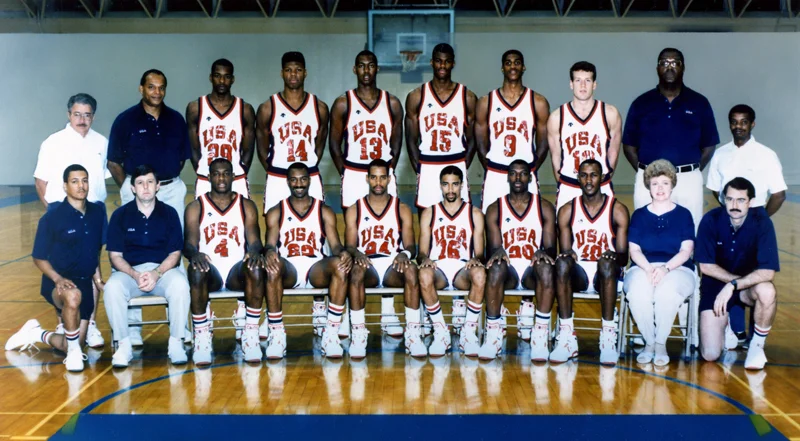
Going into the 1988 Summer Olympics, the USA men’s basketball team was a favorite. Winning a gold medal was almost a given, with the USA team winning the gold medal 9 out of the last 11 Olympics prior to it becoming an official Olympic sport in 1936.
 
The two gold medals they missed were in 1972, when they took silver.  The loss to the Soviet Union in 1972 in Munich was widely disregarded because of the game’s controversial, botched ending.  Then, in 1980, they didn’t enter due to the boycott, a political protest led by President Jimmy Carter, against the Soviet Union’s invasion of Afghanistan.
Source: nbahoopsonline.com
The 1988 USA Team consisted of collegiate stars who would go on to play in the NBA, including David Robinson, Danny Manning, Mitch Richmond, and Hersey Hawkins.  With the weight of history firmly on their backs, the U.S. entered the 1988 Olympics looking to uphold those lofty standards.
 
Just four years earlier, in 1984, an American team featuring college legends like Michael Jordan, Patrick Ewing, and Chris Mullin had coasted to a gold medal. They won all eight of their games by double digits, crushing Spain 96–65 in the final. That win was bold, clear, and dominant.  The kind of performance that made people believe U.S. basketball was untouchable.
 
Coming into 1988, expectations were sky-high. The thinking went: if we won with Jordan, Ewing, and Mullin just four years ago, surely, we can do it again with Robinson, Manning, and Richmond.
 
The formula hadn’t changed. Why should the outcome?
 
How many times have you heard this, or even said this, within your leadership team? 
 
”We’ve always done it this way and produced results; let’s keep going.”
 
But basketball, like any high-level team endeavor, isn’t just about repeating a formula. It’s about reading the moment.  It’s being committed to learning and growth, valuing varying perspectives. It’s about knowing that the world changes, that opponents grow stronger, that success yesterday doesn’t guarantee success tomorrow.
 
And that’s where the 1988 team may have misstepped.
 
They weren’t prepared for just how much international basketball had evolved. The global teams were no longer intimidated; they were inspired. They watched tape, practiced with precision, and came in ready to challenge everything the U.S. thought it could rely on: talent, legacy, and the name on the jersey.
 
Great teams talk openly with each other. They ask questions. They stay curious. They don’t always have to be right; they want to learn.
 
But the 1988 team may have been stuck in an old mindset: “We’re the U.S., of course, we’re going to win.” That’s a dangerous way to think, especially when the rest of the world is getting better and smarter.
 
Other countries were playing professional-level basketball.  Teams like the Soviet Union and Yugoslavia weren’t afraid of the U.S. anymore. They communicated well. And when it came time to play, they didn’t back down.
 
This moment, the US 1988 loss to the Soviet Union, showed that talent alone isn’t enough.
 
Players have to know when to lead, when to listen, and when to change their game. A strong team isn’t just made of stars; it’s made of teammates who trust each other and talk honestly.
 
In the end, the bronze medal may have felt like a disappointment, but it actually changed everything.  The loss in 1988 helped spark a major shift.
 
Four years later, in 1992, the U.S. decided to send its best professional players to the Olympics, and the result was the famous Dream Team, one of the greatest basketball teams ever assembled.
 
But without the lessons of 1988, without the realization that mindset, teamwork, and leadership matter, that never would have happened.
 
The 1988 Olympic team had talent. They had history. They had high expectations. But they didn’t have alignment. They didn’t have the curiosity, communication, and cohesion required to win, not just on paper, but in real time, against real challenges.
 
Sound familiar?
 
Many leadership teams today are facing the same pattern. Not on a basketball court, but in boardrooms, Zoom calls, planning meetings, and 1-1 meetings. Talent isn’t the issue.
 
Results might even be “fine.” But under the surface? Something’s off. And just like that, 1988 team, the cost of those invisible gaps is much higher than most people realize.
Here are five common missteps we see repeatedly in our work with leadership teams. These are the patterns that quietly erode trust, momentum, and real collaboration:
 
1. Avoiding conflict and not speaking with candor.
Instead of open, honest conversations, people say what’s safe. They filter. They agree. They leave things unsaid.  They “stay in their lane.”   It might feel polite, but it’s not powerful.
 
Great teams don’t avoid tension; they use it. They speak the truth in the service of growth, not to win points.
 
2. Clinging to being right instead of being open.
“We’ve always done it this way” is the corporate version of “We’re the U.S., of course we’re going to win.” It’s a mindset that blocks learning.
 
Real professionals are students of the moment. They ask: What’s changed? What do we need to see more clearly? What assumptions might be holding us back?
 
3. Operating in silos instead of as a unified team.
When everyone is just “staying in their lane,” it might feel efficient, but it kills true collaboration and creativity. Water cooler whispers replace real-time feedback. Innovation slows. Trust fades. Resilience drops.
 
Great teams aren’t a group of individuals; they are a network of aligned, connected leaders who share responsibility for outcomes.
 
4. Over-relying on top-down leadership.
When all the recognition, coaching, and feedback flow from the CEO or executive lead, it creates pressure at the top and passivity everywhere else. Peer-to-peer recognition isn’t a “nice to have,” it’s the heartbeat of a mature, agile team.
 
When teammates coach each other, celebrate each other, and challenge each other, the whole organization rises.
 
5. Unspoken social contracts.
Every team has a culture. But is it intentional? Or accidental? Too often, communication norms are fuzzy, feedback expectations are unclear, and agreements around “how we treat each other” live in the shadows.
 
Without clear social agreements, even smart teams slide into mediocrity, not intentionally, but out of habit.
Here’s the big ah-ha: most teams don’t even realize they’re underperforming.
 
They’ve gotten used to the water they’re swimming in. They confuse “we get along” with “we’re aligned.” They accept co-existence when they can have co-elevation.
 
And just like the team in 1988, the gap doesn’t show up until it really matters.  In a milestone moment, a launch, a transition, a missed opportunity. The loss shows up first. The learning comes later.
 
But what if we didn’t wait for the loss?
 
What if we built teams where candor was normal, curiosity was expected, and collaboration was woven into the way we work, not just the way we talk?
 
What if our teams dared to move beyond comfort and into the kind of connection and challenge that leads to real, lasting wins?
 
The first step: Recognize where your team stands today.
 

Click HERE to access our Team Alignment & Performance Assessment.

Then, be sure you’re subscribed to our newsletter HERE.

Next week, we’ll share the tactical strategies to help you rebuild your “dream team.”  One that is cohesive, aligned, and enthusiastic for what’s next.
Is it possible to feel content and ambitious?

Is it possible to feel content and ambitious?

You once wanted what you now have.

Take a breath and let that thought settle in.

Most days, we wake up and start moving before we’ve even checked in with ourselves. We’re already thinking about what’s next, what’s unfinished, what’s urgent, what’s missing.

But what if we paused before the day took over?

What if we asked ourselves one simple question that could shift our entire outlook?

Last week, I led an offsite with one our client. Their entire team was present. I introduced a daily practice that has shaped how I lead, how I live, and how I connect with others. It starts with a simple question:

“How do I want to feel today?”

I’ve asked myself this question for over a decade. It helps me stay grounded, not just in what I want to do, but in who I want to be.

Here was my answer that morning: Playful. Delighted. At ease + content. Engaged.

And then I wrote: “A shift from always pushing forward and pulling others uphill to experiencing and allowing the unfolding.”

That word, unfolding, has stayed with me.

Later that same morning, another question came: Is it possible to be ambitious and content at the same time? Does one steal from another?

Here’s what I believe: I believe it’s possible, but only if you’re grounded, clear, planned, focused, AND open and flexible on ONE THING.

What’s that ONE THING?

  • One big, bold goal.

  • One present moment.

  • One focus that matters.

  • One opportunity to pause, notice, and let life unfold.

At The Amplified Life Company, we use this question “How do I want to feel today?” to help teams build emotional intelligence.

When teams start asking this daily and openly sharing their answers, something powerful happens. People become more self-aware. They become better listeners. They speak more clearly and kindly. Trust grows.

This creates real shifts: better communication, smoother operations, and stronger outcomes.

You can’t grow a team that’s burned out or disconnected. But you can grow one that’s self-aware, emotionally present, and aligned.

And it starts with one question.

So here’s something to reflect on:

You once wanted what you now have. Have you moved the goalposts?

If you’re like me, the answer is probably yes. And that’s not a bad thing. Growth is good. Ambition is good.

But don’t forget to shift your energy. Move from pressure to presence. From striving to celebrating. From chasing to allowing.

Because in the unfolding, you may find the one thing we’re all searching for—but often call by other names like success or happiness.

You’ll find peace. 

One way to support this shift is by writing it down. This journal helps you slow down, get clear, and set your intention each day. When you take just a few minutes to answer, “How do I want to feel today?” You create space for better focus, more calm, and stronger leadership.

Try this 90 day journal HERE.

The Clarity → Devotion → Discipline → Impact Framework Every Leader Needs

The Clarity → Devotion → Discipline → Impact Framework Every Leader Needs

Read this quote and let it sink in for a moment, then keep reading:

“One of the most difficult problems in modern life: how to get everything done you need to do and still have time for creativity, family, and yourself.”  – Gay Hendrick

Two weeks ago, I was sitting in church when the pastor asked, “What are you devoted to?”

He went on to say that devotion is a decision, but misdirected devotion is dangerous.  He shared that devotion is shaped by vision. Vision anchors you. Then he reminded us of this scripture:

“Where there is no vision, the people perish…” – Proverbs 29:18

In other words, when people lack clarity of direction, they drift. And when there’s no shared vision, people lose discipline, unity, energy, and hope.

I looked around the church that day as the pastor spoke about the vision for the future:

2026: The Year of Devotion

You could feel it; people were leaning in, ready, hungry, fully receiving the message. It was delivered with purpose, power, and presence.

And when it ended? 

People left inspired, curious, and wondering what devotion could look like in their own lives. 

I concluded that many were left wondering what they needed to do in order to be devoted.  Put plainly in my words, what disciplines would they need to build around what matters most?

People often tell me I’m one of the most disciplined people they know, and I agree. 

I’ve heard it so often that I started studying the nature of discipline itself. That exploration became one of the foundational beliefs at The Amplified Life Company: Disciplines and systems are the key to the freedom you seek.  

And yet, discipline still gets a bad rap.

Take a moment to consider your own deep beliefs around discipline.  We admire discipline from afar. We envy the people who seem to “have it together.” 

But when it comes to applying discipline in our own lives?

We often tell ourselves stories that let us off the hook.

How do I know this is true?

Because that was me, always letting myself off the hook.

For years, that was me, competing to win, yet quietly allowing myself to fall short. Settling for good but never truly touching great. I was the queen of planning, preparing, and color-coding it all.  Then, as soon as discomfort hit, I would slip back into old habits, allowing my discipline to slip away. 

It looked like I had it all together because I was still reaching goals.  Yet, they were comfortable ones. The ones that didn’t ask much of me.  It wasn’t because I was lazy. It was because I didn’t yet understand something important: discipline without devotion doesn’t last.

Maybe you can relate. Have you ever found yourself…

  • Talking yourself out of keeping your own commitments because you “don’t have time,” when what you’re really lacking is clarity?

  • Believing that discipline will suffocate your creativity or spontaneity, not realizing that structure is actually what gives freedom room to breathe?

  • Waiting for motivation to strike instead of designing systems that move you forward, no matter how you feel?

Here’s what I’ve come to realize:

Discipline alone is not enough. Devotion is what makes discipline sustainable.

Let’s be clear, devotion is not just a word for spiritual or religious practice. It’s the foundation of dynamic leadership.

Discipline is doing what you said you’d do. Devotion is remembering why it matters.

Discipline comes from the mind: it’s strategy, structure, systems. Devotion comes from the heart: its meaning, mission, vision.

Without devotion, discipline becomes dry, performative, or even punishing. But when you’re devoted to something greater than yourself, your purpose, your people, your vision, discipline becomes intentional action fueled by purpose.  It becomes who you are, not just what you do.

This is Above the Line leadership

It’s not about controlling every outcome. It’s about choosing from commitment, not from comfort. It’s about aligning your actions with what matters most, even when it’s inconvenient, unsexy, or requires you to outgrow your old identity.

You don’t need more willpower. You need more clarity.

You don’t need to be harder on yourself. You need to be more devoted to what truly matters.

Here’s the formula:  

Clarity → Devotion → Discipline → Impact

This week, I challenge you to ask yourself and get clear on what matters most, what you are truly devoted to, and then build your disciplines around that:

  • Where am I confusing discipline with deprivation?

  • What am I truly devoted to in this season of my life and leadership?

  • What systems, habits, or boundaries would be easy to maintain if I were fueled by devotion instead of pressure?

The people you admire aren’t just more “disciplined” than you. They’re more devoted. To their purpose. To their principles. To the person they’re becoming.

And you can be, too.  If this hit home today, I’d love to hear your thoughts in the comments below.

Join Waitlist We will inform you when the product arrives in stock. Please leave your valid email address below.